📍Galway · West📋IFI (Republic of Ireland)Season Open
3Species Present
County
Galway
Region
West
Type
Lough
Species
Atlantic Salmon, Sea Trout, Brown Trout
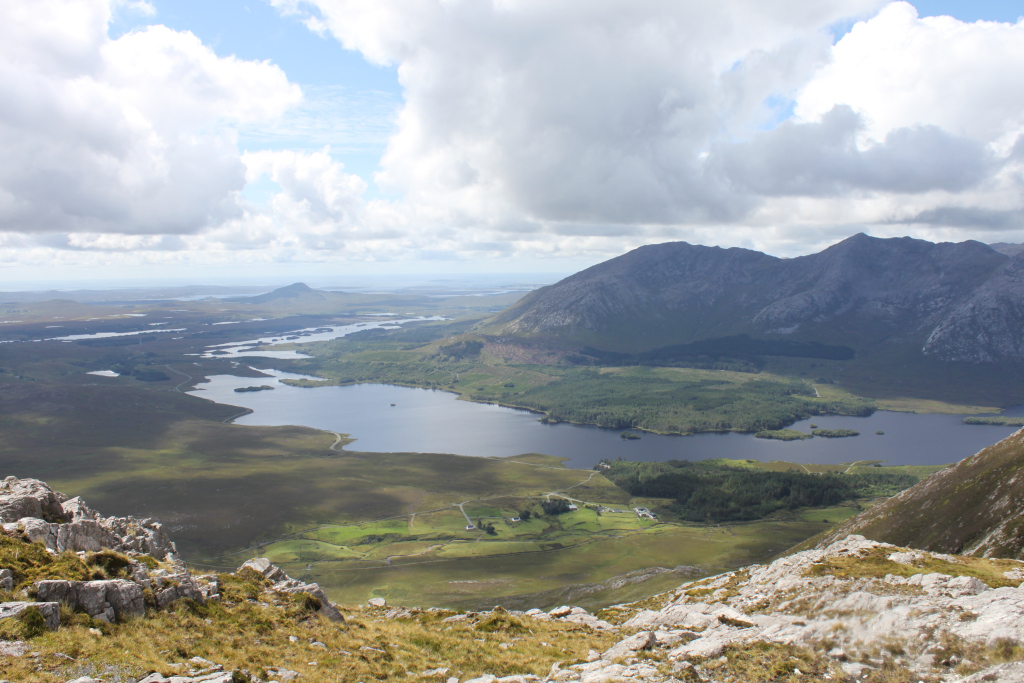
Lough Inagh & Derryclare Fishery is one of Connemara's premier game fisheries, set in the spectacular Inagh Valley between the Twelve Bens and Maumturk mountain ranges in County Galway. Comprising two outstanding loughs — Lough Inagh and Derryclare Lough — plus connecting rivers with seven river beats, this is a fishery of rare beauty and exceptional quality that sits at the top of the larger Ballynahinch river system.
Lough Inagh is the largest lake in Connemara, stretching approximately seven kilometres long and one kilometre wide, dotted with wooded islands and flanked by two of Ireland's most iconic mountain ranges. The water is naturally acidic from granite bedrock and peat, but several underwater limestone seams buffer the acidity, supporting a healthy food chain that produces exceptional trout. Eight boats are available on the lake, kept in a historic boathouse on the east shore, with outboard motors essential given the lake's size.
Derryclare Lough lies downstream of Inagh, connected by a tumbling river. Three sets of stone fishing piers — the famous Derryclare Butts — are built out into the lake for anglers' convenience, and they rank among the most iconic fishing spots in the West of Ireland. No boats are available on Derryclare, with all fishing done from the Butts and the bank.
Atlantic salmon are the prize quarry, with spring fish averaging around ten pounds entering from March and peaking in May. Grilse arrive in early June and provide sport through to the end of September. Sea trout have made a strong comeback in this part of Connemara, with the first run reaching the lake in early July and fish to five pounds recorded. Up to fifty sea trout have been taken by a single boat in one day during peak periods.
Lough Inagh has become noted for the quality of its brown trout fishing, holding a large head of wild fish averaging three to four pounds, with specimens up to twelve pounds caught in recent years. The lake harbours ferox trout — large cannibalistic brown trout held in high esteem by Irish anglers — adding an extra dimension to the fishing.
The fishery is managed by Lough Inagh Lodge Hotel, a charming four-star country house originally built in the 1880s as a fishing lodge for Richard Berridge, a London brewer. Beats are rotated daily between the lodge and the Inagh Valley Inn. Fly fishing only is permitted, with normal fishing hours from 9:30am to 7:00pm. The lodge preserves historic catch record books spanning well over a century, making fascinating reading for any visiting angler.
Grilse: June, July, August, September
Sea Trout: July, August
Brown Trout: May, June, July, August, September
Spring Salmon: March, April, May
Difficulty
Intermediate
Access & bases
Located in the Inagh Valley, off the R344 road between Recess and Letterfrack. From Galway: take the N59 towards Clifden as far as Recess (approximately 66 km), then turn right onto the R344 towards Letterfrack — Lough Inagh Lodge is approximately 4.5 km up this road on the right-hand side. Approximately one hour ten minutes from Galway Airport, 42 miles from Galway City. Eircode: H91 E3Y8. Accommodation at Lough Inagh Lodge Hotel (13 rooms, 4-star) directly on the shores of the lake. Inagh Valley Inn also nearby. Tackle shop at the lodge with rod, reel, and equipment hire available, plus a comprehensive selection of salmon and sea trout flies. Ghillies and guides available by prior booking — recommended for first-time visitors. Ballynahinch Castle Hotel is downstream in the same system.
Signature features
The Derryclare Butts
Three sets of long stone fishing piers built out into Derryclare Lough for anglers' convenience, the Derryclare Butts are among the most iconic fishing spots in the West of Ireland. Positioned where the Inagh River flows into Derryclare Lough, they offer the best prospect for spring salmon in medium water during April. No boats are available on Derryclare — all fishing is done from these historic piers and the bank, making them a unique and atmospheric fishing experience.
Historic Fishing Lodge
Lough Inagh Lodge Hotel was originally built in the 1880s as a fishing lodge for Richard Berridge, a London brewer. The lodge preserves historic catch record books spanning well over a century, making fascinating reading for visiting anglers. A member of the Original Irish Hotels group and the Great Fishing Houses of Ireland, it is one of the oldest purpose-built fishing lodges in Connemara, offering thirteen rooms directly on the shores of the lake.
Spectacular Mountain Setting
The Inagh Valley is flanked by two of Connemara's most iconic mountain ranges — the Twelve Bens (Beanna Beola) to the west and the Maumturk Mountains to the east. The setting is among the most dramatic and wild in Ireland, with the loughs reflecting the surrounding peaks on calm days. Kylemore Abbey is just a fifteen-minute drive away, and Connemara National Park is also close by.
Ferox Trout
Lough Inagh harbours ferox trout — large cannibalistic brown trout that grow to exceptional sizes by preying on smaller fish. Held in high esteem by Irish anglers, ferox are rare and difficult to catch, but the possibility of encountering one adds an extra dimension to every day on the water. Fish up to twelve pounds have been recorded in recent years.
Season by season
March - May
The spring salmon season offers the chance of larger fish averaging ten pounds. Spring fishing peaks in May on Lough Inagh, while the Derryclare Butts are at their best in April when water levels are medium. Brown trout fishing picks up through spring as water temperatures rise. This is a quieter period on the fishery, offering solitude amid spectacular Connemara scenery.
June - July
The prime period on the fishery. Grilse arrive in early June, coinciding with the start of the sea trout run. July is the standout month when sea trout, grilse, and brown trout are all active simultaneously. The Trout Pool and Green Point are hotspots for sea trout. Boat fishing on Lough Inagh is at its most productive, and the river beats fish well after any rise in water. Advance booking essential.
August - September
Grilse continue to run through August and into September. Dapping comes into its own during August and September, bringing up the best sea trout. Brown trout fishing remains excellent, particularly on overcast days with a good wave. Late-season spates can produce exceptional sport on the river beats. The surrounding mountains take on their autumn colours, making this a beautiful time to fish the Inagh Valley.
Best conditions
Based on 0 reports, these conditions consistently produce the best fishing on Lough Inagh & Derryclare Fishery:
💨
SW Force 3-4
Best wind
☁️
Overcast with breaks
Best sky
🌡️
12-16C
Water temp
⏰
All day in season; sea trout often best at night in July
Best window
Seasonal fly & tactics guide
Spring Salmon (March - May)
Patterns
Sunray ShadowCascadeSilver StoatBadgerSilver Rat
Spring salmon on Lough Inagh are best targeted from a drifting boat along the west shore, around the islands, and at river mouths. On the river beats, fish the deeper pools and lies with larger flies (sizes 6-8). The Derryclare Butts offer excellent sport in April when water levels are medium — cast from the stone piers and let flies swing through the current where the Inagh River enters the lough. A floating line with a long leader works well in normal conditions.
⚠️Common mistake: Neglecting the Derryclare Butts in April. Many anglers head straight for the boats on Lough Inagh, but in medium water conditions the Butts can be the most productive spot on the entire fishery for spring salmon.
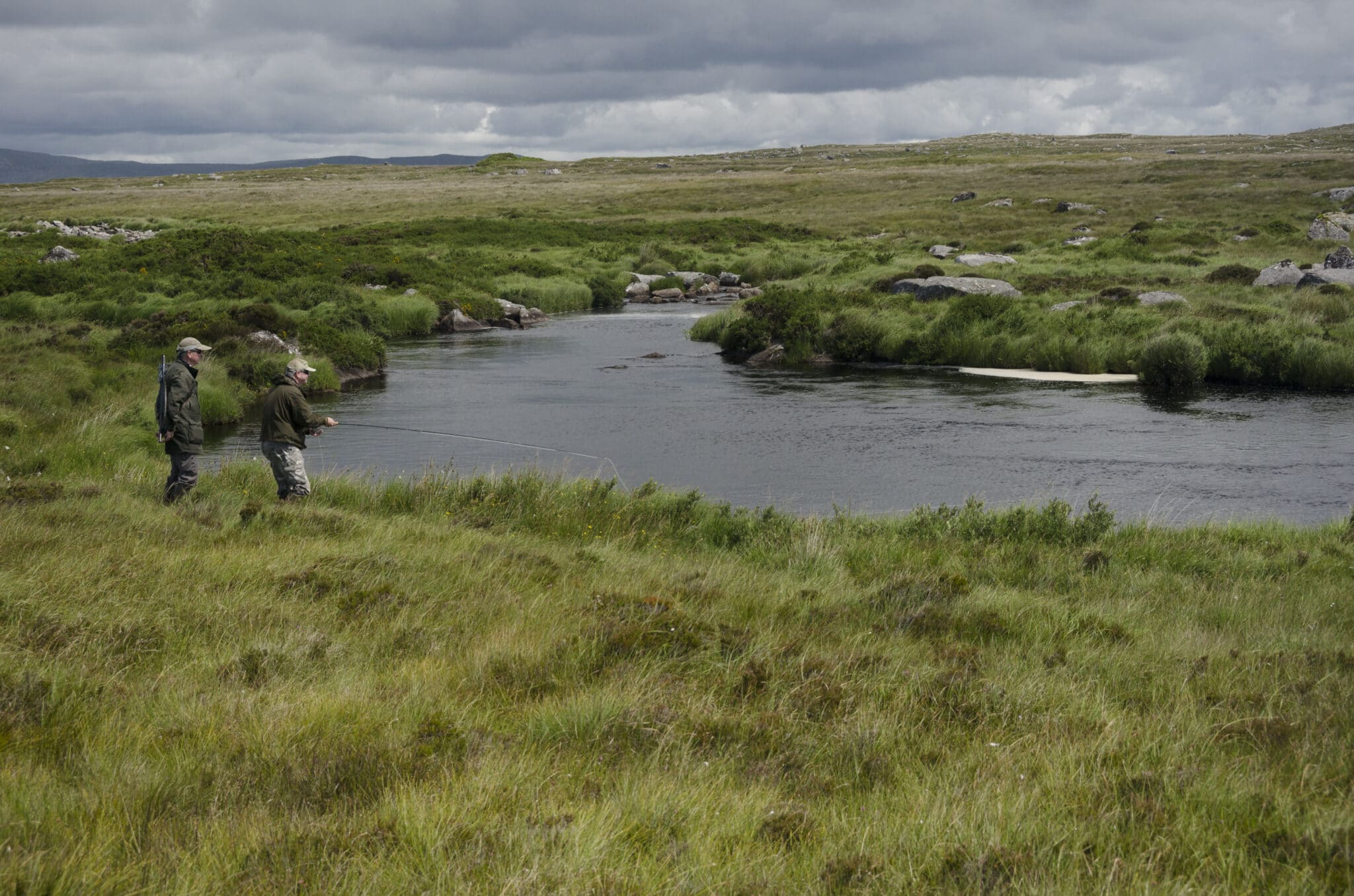
When grilse and sea trout are running, traditional lough-style drift fishing from a boat is the most productive method on Lough Inagh. Fish the west shore, along the islands, and at river mouths. For sea trout, try small dry flies by day and switch to a couple of wet flies after dark. The Trout Pool and Green Point are hotspots for sea trout in July. On the river beats, the Corloo outflow offers excellent sea trout fishing from the bank and a perfect salmon lie in high water. Single-handed rods of ten feet rated six to eight weight are the rods of choice.
⚠️Common mistake: Ignoring night fishing for sea trout. Some of the best sea trout sport at Lough Inagh comes after dark, particularly in July — anglers who pack up at dusk can miss the best fishing of the day.
Brown Trout (Season-long)
Patterns
Watson's FancyBibioButcherPeter RossGreen PeterClaret and MallardDaddyDunkeld
Dapping
Daddy LonglegsGreen Peter
Brown trout respond well to traditional lough-style wet fly fishing from a drifting boat. Early in the season, use classic patterns like Bibio with a red centre, Watson's Fancy, and Butcher. From July onwards, add Jacob's Ladder, Green Peter, and Claret and Mallard to the team. Dapping with natural or artificial Daddy Longlegs can bring up the best fish in August and September. Focus drifts along the west shore and around the islands where brown trout concentrate.
⚠️Common mistake: Using too heavy a leader. Lough Inagh's clear water means brown trout can be leader-shy — fish a lighter tippet (6-8 lb) for better presentation, especially on calm days.
Core technique
Traditional Lough-Style Drift Fishing
1Motor upwind to the start of your chosen drift along the west shore or island chain.
2Cut the engine and allow the boat to drift broadside with the wind.
3Cast a team of three wet flies on a floating line, working them back with a figure-of-eight retrieve.
4Keep your rod tip high to maintain contact with the flies and lift them through the wave.
5Cover the water methodically — the boat's drift ensures you fish fresh water constantly.
6When a fish rises to the top dropper, resist the urge to strike immediately — let the line tighten first.
7At the end of the drift, motor back upwind and begin again on a parallel line.
💡 The six traditional nineteen-foot wooden boats kept in the historic boathouse are perfectly suited to lough-style drifting. A drogue can be used to slow the drift in stronger winds.
What works here
Flies and methods reported most successful by the community.
Where to Fish at Lough Inagh & Derryclare Fishery
West Shore — Lough Inagh
The west shore of Lough Inagh fishes best for all species. Long drifts along this shore, particularly where rocky points and bays create structure, produce consistent sport. The shallow margins warm faster in spring, attracting both trout and salmon.
Islands — Lough Inagh
The wooded islands dotted along Lough Inagh create excellent holding water for salmon, sea trout, and brown trout. Drifting along the island chain and around their margins is one of the most productive approaches. The deeper water between islands can hold ferox trout.
River Mouths
Where rivers and streams enter Lough Inagh, fresh water brings food and oxygen that attract fish. These are prime lies for salmon and sea trout, particularly after rain when fresh fish push into the lake. The Corloo outflow is especially productive.
Derryclare Butts
The three sets of stone fishing piers at the top of Derryclare Lough, where the Inagh River flows in. The most famous fishing spot on the system and the best prospect for spring salmon in medium water during April. All fishing from the Butts and bank — no boats available on Derryclare Lough.
Corloo
An outflow from Lough Inagh that offers excellent sea trout fishing from the bank. In high water, Corloo provides a perfect salmon lie. A compact and productive spot that rewards patient fishing, particularly during the July sea trout peak.
Trout Pool & Green Point
Two hotspots for sea trout, especially during July when the first run reaches the lake. These areas consistently produce sea trout and are worth targeting specifically during the evening and after dark.
River Beats (7 beats)
Seven river beats on the connecting rivers between the loughs. Beats are rotated daily between the Inagh Valley Inn and Lough Inagh Lodge Hotel. The river beats fish best after rain when water levels rise, bringing fresh salmon and sea trout upstream. Biting midges can be troublesome on the river beats, so come prepared.
Suggested trip formats
🎣 Guided Boat Day on Lough Inagh
A full day on Lough Inagh with an experienced ghillie, fishing from one of the traditional nineteen-foot wooden boats. The ghillie provides local knowledge, fly selection, and boat handling while the angler focuses on fishing. Covers the west shore, islands, and river mouths. Approximately eight hours on the water. Ideal for first-time visitors.
🎣 Derryclare Butts Session
A focused session fishing from the famous stone piers at Derryclare Lough. Best in April and May for spring salmon, and through summer for sea trout. No boat needed — all fishing from the Butts and bank. A unique and atmospheric experience that connects anglers with decades of tradition.
🎣 Sea Trout Evening & Night Session
An evening and night session targeting sea trout from boat or bank during July and August. Begins in late evening and can continue past midnight. Try small dry flies by day and switch to wet flies after dark. The Trout Pool and Green Point are prime spots. One of the most exciting fishing experiences in Connemara.
🎣 Connemara Multi-Day Break
A three to five day stay at Lough Inagh Lodge Hotel combining lough fishing, river beats, and Derryclare Butts fishing. Allows anglers to experience the full diversity of the fishery across different conditions. Can be combined with fishing at Ballynahinch Castle downstream. The lodge's four-star accommodation and restaurant make this a memorable sporting holiday.
Conservation & stewardship
🌿
The Lough Inagh & Derryclare Fishery operates under strict conservation principles. All sea trout must be released alive under current legislation, reflecting the ongoing recovery of sea trout populations in this part of Connemara following the downsizing of local salmon farms. Anglers are expected to use barbless hooks, handle fish carefully in the water, and minimise air exposure during unhooking. The fishery works closely with Inland Fisheries Ireland on stock monitoring and habitat management. The recovery of sea trout at Lough Inagh demonstrates what careful management can achieve, and anglers have a responsibility to support these efforts.
Frequently asked questions
Guides & Services on Lough Inagh & Derryclare Fishery
Main access: Professional ghillies available through Lough Inagh Lodge Hotel — book in advance, especially during July, Stanley's tackle shop, Clifden — licences, flies, and local advice, Lough Inagh Lodge Hotel — permits, tackle, ghillies, and accommodation directly on the lake shore