📍Galway · West📐0.18 km²📋IFI (Republic of Ireland)Season Open
3Species Present
County
Galway
Region
West
Type
River
Surface area
0.18 km²
Depth
3 m
Species
Atlantic Salmon, Brown Trout, Sea Trout
The River Corrib is one of Ireland's most distinctive salmon rivers — a short, powerful, limestone-fed system that carries the full weight of Lough Corrib to Galway Bay in just six kilometres. Where most of Ireland's great salmon rivers demand long drives into remote countryside, the Corrib flows through the heart of Galway City, combining historic angling heritage with remarkable urban accessibility.
Despite its brevity, this is no simple river. Regulated weir structures, controlled water releases from the lough, and strong tidal influence in the lower reaches create a system that rewards knowledge above endurance. Holding lies are defined, seasonal windows are precise, and the fish run hard and bright.
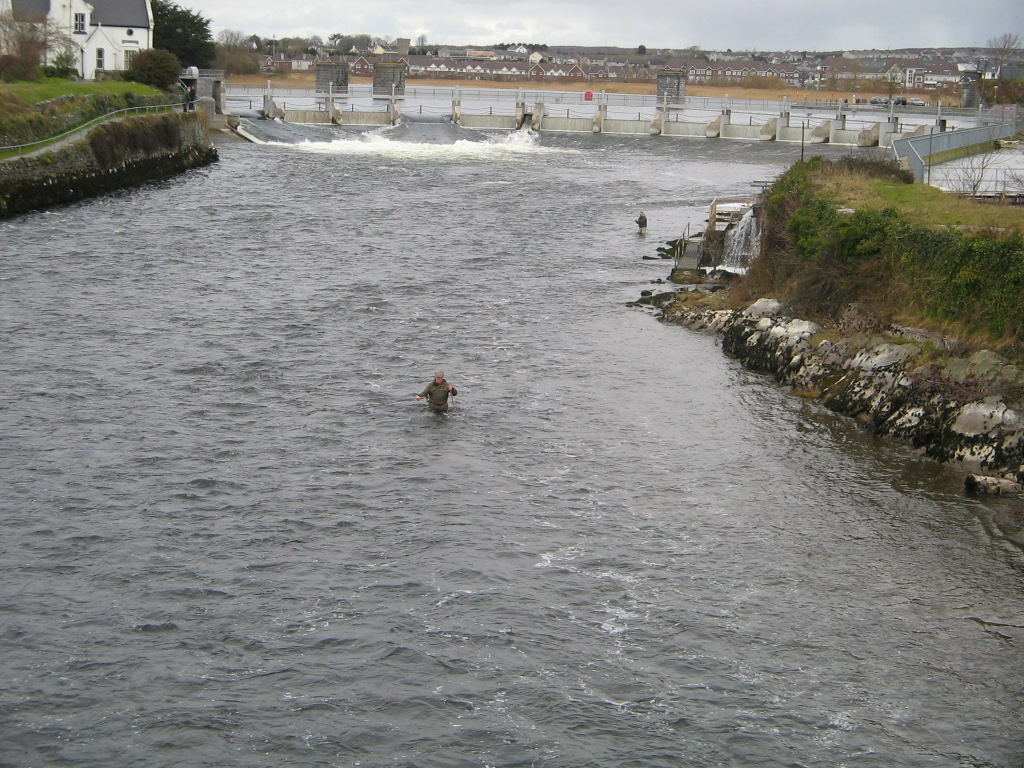
Atlantic salmon are the primary draw. Grilse arrive in numbers from mid-June through July — fresh from the Atlantic, full of aggression, and responsive to a well-presented fly in the right conditions. The Salmon Weir fishery, immediately below the lough outlet near Salmon Weir Bridge, is among the most recognisable salmon stands in Ireland. Anglers rotate through numbered positions fishing defined lies where fish pause before negotiating the weir. It is disciplined, structured, and demanding.
Sea trout run alongside the summer grilse, with the best fishing typically in June and July. Resident brown trout are present throughout the system, though the river's salmon reputation overshadows this aspect — most anglers visiting the Corrib for trout head instead to the lough above.
Fishing here is not casual. Success depends on timing the tides, reading regulated flows, and adapting quickly to conditions. Visiting anglers consistently benefit from hiring a local guide familiar with the daily rhythms of this unusual river. But for those who invest the time to understand it, the River Corrib offers salmon fishing that is unlike anything else in Ireland.
Grilse: June, July
Sea Trout: June, July
Brown Trout: April, May
Spring Salmon: January, February, March, April
Difficulty
Intermediate
Access & bases
The primary access point is the Salmon Weir area in central Galway City, a short walk from Galway railway station and easily reached from the M6/N17. The Salmon Weir fishery operates a numbered stand rotation — booking in advance is strongly recommended during peak grilse season (June–July). Lower river access is limited due to tidal influence and urban infrastructure; local guidance is essential here. Galway City provides extensive accommodation from guesthouses to hotels, and is served by both Shannon Airport (60 km) and Dublin Airport (215 km). Tackle shops, guiding services, and all angling licences and permits are available within the city.
Signature features
The Salmon Weir Fishery
The most famous section of the river and one of Ireland's most iconic salmon stands. Located immediately below Salmon Weir Bridge in central Galway, this regulated fishery provides structured access to prime holding water where salmon pause before negotiating the weir. Anglers rotate through numbered stands, fishing defined lies in a disciplined, rotation-based format that requires accuracy and good casting etiquette rather than distance.
Tide-Influenced Salmon River
Unlike most Irish salmon rivers, the lower Corrib is significantly influenced by tidal movement from Galway Bay. Fresh fish run strongly on incoming tides, making tidal timing as important as water conditions or fly selection. Local knowledge of the daily tidal window is essential for maximising time on the water.
Urban Accessibility
The River Corrib flows through Galway City — one of Ireland's most vibrant cultural destinations. This makes it uniquely accessible compared to remote west-coast salmon systems. Anglers can combine serious salmon fishing with city accommodation, restaurants, music, and culture in a way that is simply not possible on most Irish rivers.
Season by season
January – March
Early season spring salmon fishing. Runs are variable and less predictable than later in the year. Cold water requires slower presentation and heavier flies fished deeper. Worth fishing in a favourable season but not the primary window for most visiting anglers.
April – May
Improving conditions as water temperatures rise. Fish numbers increase through this period and activity picks up. Good transitional fishing, particularly in May when conditions stabilise.
June – July
Peak season. Fresh grilse run strongly on incoming tides, particularly from mid-June through late July. This is the prime window for the River Corrib — fish are aggressive, conditions are stable, and the Salmon Weir fishery operates at its best. Book stands well in advance.
August – September
Late season with fish that may lie deeper and become more selective. Black and yellow patterns and red tube flies come into their own. September can produce good fishing in favourable water conditions as a final run of fish enters the system before season close.
Best conditions
Based on 0 reports, these conditions consistently produce the best fishing on River Corrib:
💨
Light to moderate — not a factor in the same way as lough fishing
Cold water demands a slower presentation and a deeper fly. Use intermediate or sink-tip lines to get the fly down into the holding layers. Fish the swing slowly and methodically — do not rush the presentation. Salmon in cold water are lethargic and require the fly to come to them rather than expecting aggressive takes.
⚠️Common mistake: Fishing too fast in cold water. Anglers used to summer grilse fishing often strip or swing too quickly — slow everything down in January through March.
April – May
Patterns
Ally's ShrimpTemple DogBlack & Silver Tubes
Transitional period — adapt to conditions. If flows are strong, use a short sink tip. If water has cleared and warmed, move to floating or intermediate lines with smaller flies. Fish are becoming more active and beginning to respond to more standard presentations.
⚠️Common mistake: Sticking rigidly to spring tactics as conditions improve. Be prepared to drop hook size and line weight as water warms through May.
June – July (Peak Grilse)
Patterns
Small CascadeAlly's Shrimp (reduced size)Green Highlander TubeShrimp Patterns
Fish the tidal windows. Incoming tides move fresh fish up into the system — position yourself on the weir stands when tides are favourable and fish with confidence. In bright conditions, reduce fly size and fish higher in the water column. On overcast days, move to larger, darker patterns. Fresh grilse are aggressive and respond well to a clean, controlled swing across the current.
⚠️Common mistake: Ignoring tidal timing. Fishing outside the productive tidal window and wondering why the river seems dead is the most common error on this system.
August – September
Patterns
Black & Yellow TubesRed Tube FliesDark Shrimp Patterns
Late-season fish may lie deeper and become more selective as pressure increases and water temperatures fluctuate. Adjust depth based on water clarity and temperature. September can produce excellent fishing when fresh fish enter the system — watch for favourable flows following autumn rain.
⚠️Common mistake: Failing to adapt fly size and depth as water clarity changes through the late season.
Core technique
Structured Weir Rotation Fishing
1Take your allocated numbered stand and wait for your rotation turn — patience and etiquette are essential at the weir.
2Cast quartered downstream at roughly 45 degrees across the current — do not cast square across as this speeds the swing too dramatically.
3Allow the fly to swing naturally across the controlled current, maintaining a downstream curve in the line.
4Step down methodically after each cast, covering the full lie before moving on.
5Precision and presentation matter more than distance — shorter accurate casts will outfish ambitious long casts in tight quarters.
💡 Local guides adjust fly size and depth multiple times during a session based on light levels, tidal state, and water clarity. Do not commit to one setup for the full day — stay responsive.
What works here
Flies and methods reported most successful by the community.
Where to Fish at River Corrib
Salmon Weir (Upper River)
The primary and most productive fishing zone. Structured rotation stands below the lough outlet provide access to defined holding lies where salmon pause before the weir. Book in advance during peak season.
Mid-River Channels
Transitional flows between the weir fishery and the tidal lower reaches. Salmon lie in defined channels and seams. Local knowledge of the specific lies is a significant advantage here.
Lower River (Tidal Zone)
The most tide-dependent section, where fresh fish enter the system from Galway Bay. Productive during the incoming tide window but requires local guidance — access is limited and the tidal influence must be understood before fishing here.
Suggested trip formats
🎣 1-Day Salmon Weir Experience
Book a rotation stand at the Salmon Weir, engage a local guide for the day, and plan your session around the tidal window. Ideal as a standalone day trip or as part of a broader Galway visit. Pairs well with an evening in the city.
🎣 2–3 Day Summer Grilse Trip
Fish morning and evening sessions across multiple tidal cycles during peak grilse season (mid-June to late July). Stay in Galway City and combine river salmon fishing with potential day sessions on Lough Corrib for wild brown trout — a genuinely varied short break.
🎣 Mixed Salmon & Trout Week
Dedicate alternating days to River Corrib salmon fishing and Lough Corrib trout fishing. The two fisheries are minutes apart and offer completely different angling experiences — structured rotation salmon fishing on the river, and wide-open drifted lough trouting above. A week covering both is an exceptional Irish angling holiday.
Conservation & stewardship
🌿
Atlantic salmon stocks across Ireland are under significant pressure and the River Corrib is no exception. Anglers should follow all current IFI guidance on catch limits without exception, use barbless hooks wherever possible, and minimise handling time for any fish to be released. Wet hands before handling, support the fish horizontally, and allow full recovery in the current before release. The river's compact nature means angling pressure is concentrated — responsible behaviour by every angler is essential to the long-term health of the fishery.
Frequently asked questions
Before You Go — Key Regulations
Jurisdiction
Republic of Ireland (IFI)
Season
January 1 – September 30
Licence required
Yes — State Salmon Rod Licence
A state salmon licence (available from IFI at fishinginireland.info) is required to fish for salmon. Additional local permits are required to fish the Salmon Weir fishery — these must be arranged in advance.
Main access: Guided services are readily available through Galway-based fishing guides familiar with both the River Corrib and Lough Corrib. Most accommodation providers in Galway can recommend local guides; booking directly in advance during peak season is strongly advised., Duffy's Fishing Tackle, Shop Street, Galway City — full range of salmon and trout tackle, local licences and permits, Galway Fisheries Board — manages the Salmon Weir fishery and can advise on current conditions and permit availability