📍Leitrim / Donegal · North West📋IFI (Republic of Ireland)Season Open
3Species Present
County
Leitrim / Donegal
Region
North West
Type
River
Depth
2 m
Species
Atlantic Salmon, Brown Trout, Sea Trout
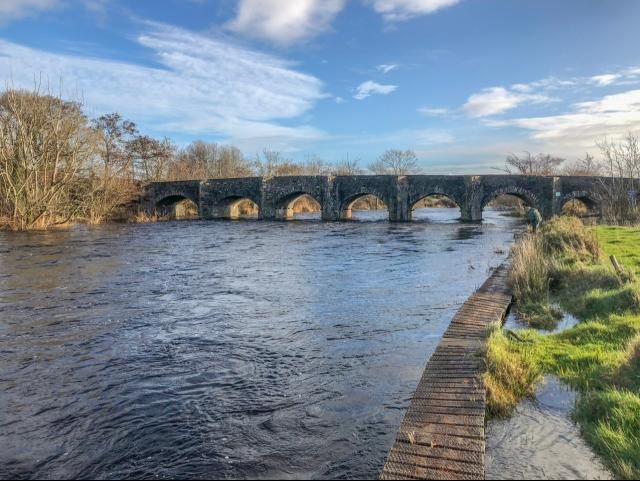
The River Drowes holds a distinction that few rivers in Europe can claim: it is Ireland's earliest consistent spring salmon river. Opening on the 1st of January, it regularly produces the country's first confirmed salmon of the year — a tradition that draws serious anglers from across Ireland, the UK, and mainland Europe to this quiet corner of the north-west coast before the fishing year has barely begun.
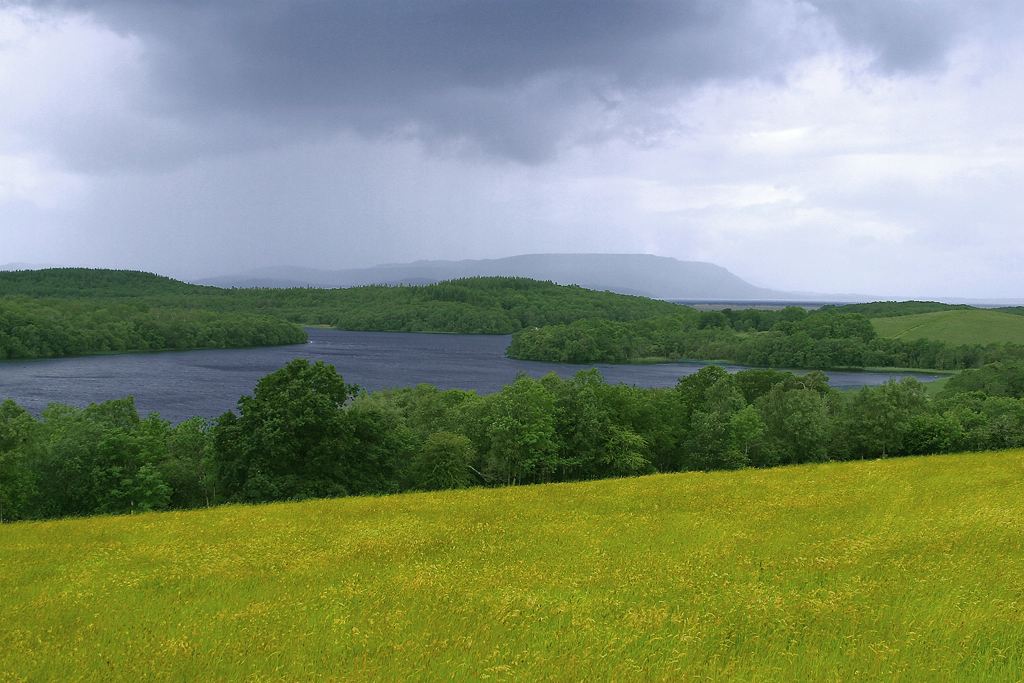
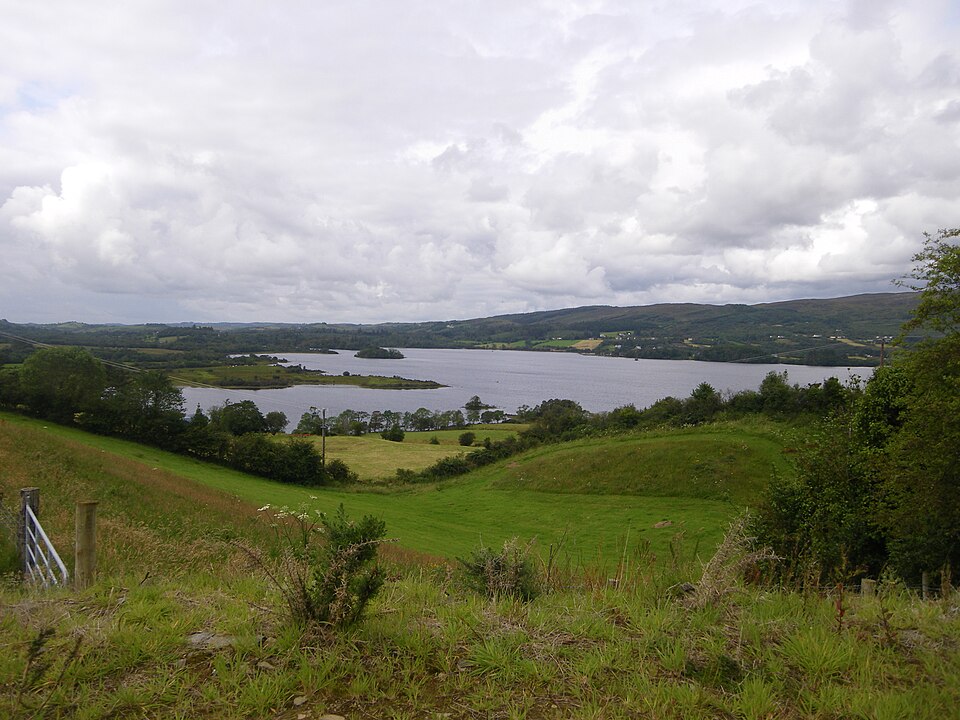
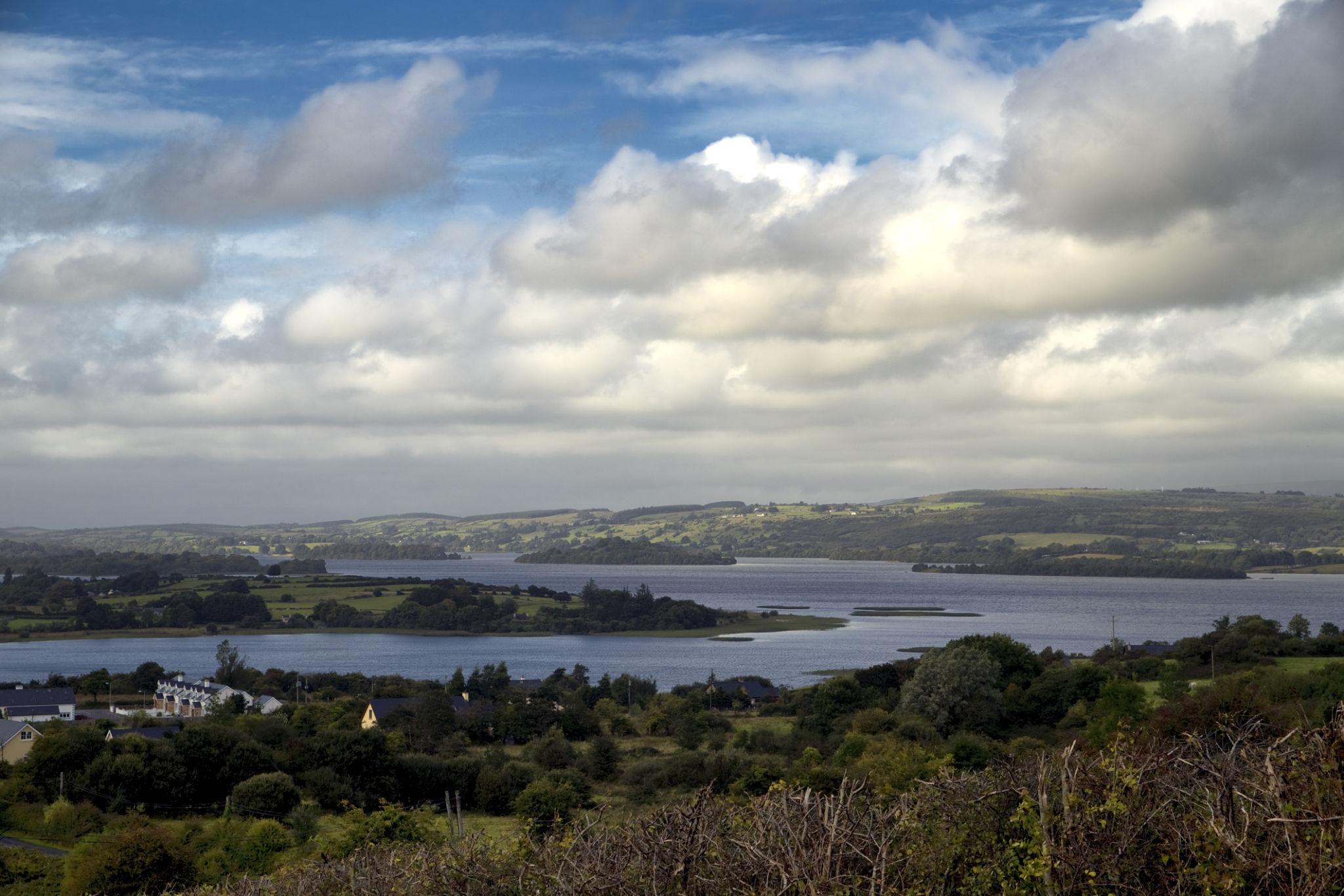
Rising from Lough Melvin, the Drowes flows just eight kilometres before it enters the Atlantic at Tullaghan, on the border between County Leitrim and County Donegal. What it lacks in length it more than compensates for in character. A classic spate river, peat-tinted and powerful, it responds quickly to Atlantic weather — fresh salmon can move from tidal water to the upper pools within hours of a rainfall event, making timing everything on this water.
The salmon that run the Drowes in January and February are multi-sea-winter fish: heavy, sea-bright, and immensely powerful. These are among the finest spring salmon in Ireland, fish that have spent two or three years at sea and carry the weight to show for it. Catches in the two-pound range are common in spring; fish of ten pounds or more are a genuine possibility. The spring run typically continues through March and into April, when water conditions allow.
Autumn offers a second window of opportunity. September spates push fresh runs of autumn salmon upriver, and these fish can be aggressive in coloured water. Bright tube flies and cascades account for many autumn fish, and the atmosphere of the river in early autumn — low golden light, leaves beginning to turn, the sense of a season closing — has its own particular draw.
Fishing on the Drowes is organised through managed beats, which keeps angling pressure reasonable and ensures access to the river's best pools. Double-handed rods with sinking lines are standard in the early season; in lower water conditions a single-hander can be sufficient. Classic patterns — Willie Gunn, Cascade, Ally's Shrimp, and shrimp-style doubles in copper and orange — form the foundation of any Drowes fly box.
For the visiting salmon angler, the Drowes offers something rare: a genuine January fishery, compact enough to cover thoroughly in a short trip, with the drama of Atlantic spates and the possibility of a powerful spring salmon fresh from the sea. Nearby towns including Bundoran and Ballyshannon provide comfortable bases for a two or three day trip.
Grilse: June, July
Autumn Salmon: September
Spring Salmon: January, February, March
Difficulty
Advanced / Experienced
Access & bases
The river is accessed via managed beats downstream of Lough Melvin and near Tullaghan village on the north-west coast. Beat booking is essential — anglers cannot simply arrive and fish. The nearest accommodation bases are Bundoran (Co. Donegal), Ballyshannon (Co. Donegal), and Kinlough (Co. Leitrim), all within a short drive of the river. The Drowes Fishery can be contacted for beat bookings and day ticket availability. River levels can rise rapidly after rainfall; always check conditions before travelling.
Signature features
Ireland's Earliest Spring Salmon River
The Drowes has earned its reputation as the river where Ireland's salmon season truly begins. The combination of its proximity to the sea, its short length, and its position on the north-west coast means that salmon can enter and reach holding pools faster than on almost any other Irish system. January fishing for fresh spring salmon is not a promise on the Drowes — it is a realistic expectation in seasons of good Atlantic rainfall.
Spate Character
The Drowes reacts quickly to rainfall, rising rapidly after Atlantic weather systems and dropping back within hours to days. This spate behaviour is both its greatest asset and its primary challenge. Fresh fish enter with every rise, but the prime fishing window — falling water, dropping colour — can be narrow. Experienced Drowes anglers check river height charts obsessively and plan their days around the hydrograph.
Intimate Pool Structure
Unlike the broad limestone loughs of Connacht, the Drowes is compact and intimate. Its pools are well-defined, often narrow, and demand precise fly presentation. There is nowhere to hide a poor cast. Anglers who can read the water accurately — identifying the holding lies in each pool and covering them efficiently — will consistently outfish those who simply work through the mechanics.
Peat-Tinted Water
The river carries a characteristic peat stain from Lough Melvin and the surrounding blanket bog. This affects visibility and fly choice throughout the season — patterns with contrast and visibility in coloured water outperform subtle natural imitations. The amber tint also means the water holds temperature better in cold conditions, which can work in the angler's favour during early January visits.
Season by season
January – March
The defining period on the Drowes. Cold, fresh spring salmon enter the river from January onward, with the best conditions occurring during mild winters and after sustained Atlantic rainfall. Fish this period with sinking lines, large tube flies, and considerable patience — the water is cold and the fish need time to settle. The first salmon of the Irish season is often taken here, making this one of the most anticipated openings in the country.
April – May
Spring fishing continues into April when water levels cooperate. Fly size scales down as the water clears, and fish that have been in the river for some time become more choosy. Fresh spring fish are still possible and provide excellent sport. May can be slow if summer conditions arrive early and water levels drop.
June – August
Summer fishing is the most unpredictable period. Success depends heavily on rainfall — without fresh spates the river drops too low to fish effectively. Early mornings and late evenings are the best windows. Smaller flies on lighter lines are the order of the day. Grilse can appear from June, providing more active sport in suitable conditions.
September
The second peak season. Autumn spates push fresh runs of salmon upriver, and these fish are often aggressive in coloured water. Bright tube flies and large cascades can produce explosive takes from fish that have been holding at sea and are responding to the pull of the river. Anglers who can time a visit with an Atlantic weather system arriving in September often enjoy the best fishing of the year.
Best conditions
Based on 0 reports, these conditions consistently produce the best fishing on River Drowes:
Fish deep and slow. Use sinking lines or heavy sink tips — typically 8 to 12 feet — to get the fly down into the cold water where fish are lying near the bottom. Cast quartering downstream and allow the fly to sink before it begins to swing. Maintain steady tension throughout the swing; do not allow the fly to race. Concentrate on the known holding lies in each pool — in cold water, fish do not move far for a fly.
⚠️Common mistake: Fishing too fast. In January water at 4–6°C, salmon are sluggish and a fly that swings too quickly will pass through the zone without provoking a response. Slow everything down — the retrieve, the swing, the pace of the day.
Scale down from the heavy tubes of early spring. Intermediate or floating lines with a sink tip suit April conditions. Fish are more willing to move in warmer water, so covering water efficiently becomes more important than depth. Work through pools methodically from head to tail.
⚠️Common mistake: Retaining spring tactics into clearing April water. As the river runs clearer, large flies on heavy sinking lines will be refused. Downscaling fly size and lightening presentation is the key transition.
Summer (June – August)
Patterns
Small doubles (size 10–14)Low-water hairwingsStoat's TailBlue Charm
Focus early morning and late evening sessions. In low summer water, fine leaders and small flies are essential. Fish are visible in the pools but easily spooked — approach carefully and keep a low profile. Greased line technique suits the slower, warmer summer water.
⚠️Common mistake: Continuing to fish when the river is bone low and clear in bright conditions. Low summer water demands patience and timing — waiting for a cloud, a rise in the river, or the cooler temperatures of dawn and dusk.
Autumn (September)
Patterns
Temple Dog (large)Bright Cascade (orange/yellow/chartreuse)Large Ally's ShrimpCollie Dog
Target rising and falling water after Atlantic spates. Autumn fish are fresh and aggressive — they will respond to bright, large flies fished with confidence in coloured water. As the spate drops and colour clears, scale back gradually. The 24–48 hours after a significant rainfall event are often the most productive of the season.
⚠️Common mistake: Missing the window. Autumn fish move through quickly on the Drowes. Arriving two days after the spate has peaked, when the river has dropped back to low summer level, can mean the fish have already passed through.
Core technique
Reading Spate Conditions
1Monitor the river height gauge before travelling. The Drowes has a predictable relationship between gauge reading and fishing quality — local knowledge or beat managers can advise on optimal heights.
2Rising water signals fish entering the system, but peak flood is often too coloured and fast to fish effectively. Resist the urge to fish through peak conditions.
3Falling water after a spate is the prime window. Fish have entered, the colour is dropping, and salmon are settling into their lies. This is when the Drowes fishes best.
4Cast quartering downstream, allow the fly to sink on a mended line, then fish the swing under steady tension. Cover the pool systematically from the head downstream, taking a step between each cast.
5Adjust depth before adjusting fly size. If fish are not responding, try a heavier sink tip to get deeper before changing pattern.
💡 Experienced Drowes anglers check Atlantic weather forecasts two to three days ahead and plan visits to coincide with the falling water after a significant rainfall event. The river can transform from unfishable to excellent within twelve hours.
What works here
Flies and methods reported most successful by the community.
Where to Fish at River Drowes
Lower River (Tidal Influence)
The lowest beats near Tullaghan are first to receive fresh fish entering from the sea. This section fishes best immediately after a spate, when the water is still running strong and the first salmon of a run are moving freely.
Mid-River Pools
The middle section contains the Drowes' most productive holding lies — well-defined pools where fish pause after their initial run from the sea. These beats are consistently productive during falling water conditions and are where the majority of fish are encountered.
Upper River (Lough Melvin Outflow)
The uppermost section near the outflow from Lough Melvin holds fish later in the season, particularly in autumn. Requires careful, quiet approach in low water — fish here have had time to become resident and are more wary.
Suggested trip formats
🎣 2–3 Day Spring Salmon Trip (January–March)
The classic Drowes experience. Book a beat in advance, monitor Atlantic weather systems in the week before travel, and plan to arrive with a spate on the way. Two full days on the river with a guide gives a realistic chance of encountering fresh spring salmon — fish that have been in the sea for two or more years and fight with extraordinary power.
🎣 4–5 Day Autumn Spate Trip (September)
For anglers with flexibility to move their dates, a September trip based around weather forecasting can be exceptionally productive. Book accommodation in Bundoran or Ballyshannon and use the flexibility to fish the Drowes when an Atlantic system arrives. This format suits experienced anglers comfortable with reading conditions and adjusting plans.
🎣 Combined Drowes & Lough Melvin Trip
Fish the Drowes for spring salmon and extend the trip to include Lough Melvin upstream for wild brown trout — particularly the unique sonaghan and gillaroo strains found nowhere else in the world. A four to five day combined trip provides variety and a memorable introduction to the best of north-west Irish angling.
Conservation & stewardship
🌿
Atlantic salmon face significant pressure from marine survival challenges across their range, and Irish rivers including the Drowes operate within conservation frameworks designed to protect stocks for future generations. Catch-and-release is strongly encouraged on the Drowes, and may be required under annual IFI conservation regulations. When handling fish, keep them in the water as much as possible, use barbless or de-barbed hooks, and return fish immediately after an unhooking photo if taken. Respect the closed season absolutely — the recovery of spring salmon stocks depends on every angler playing their part.
Frequently asked questions
Before You Go — Key Regulations
Jurisdiction
Republic of Ireland (IFI)
Season
January 1 – September 30
Licence required
Yes — State Salmon Rod Licence
A valid IFI state salmon rod licence is required. Beat permits are managed by the Drowes Fishery — contact in advance for availability and current access arrangements.
Main access: Local guides available through the Drowes Fishery and through local accommodation providers. A guide is strongly recommended for first visits and for interpreting river conditions., Mick Flanagan's Tackle Shop, Ballyshannon — traditional tackle and local knowledge, Drowes Salmon Fishery — manages beat access and permits