📍Kildare · East📋IFI (Republic of Ireland)Season Open
5Species Present
County
Kildare
Region
East
Type
River
Species
Brown Trout, Atlantic Salmon, Sea Trout, Pike, Perch
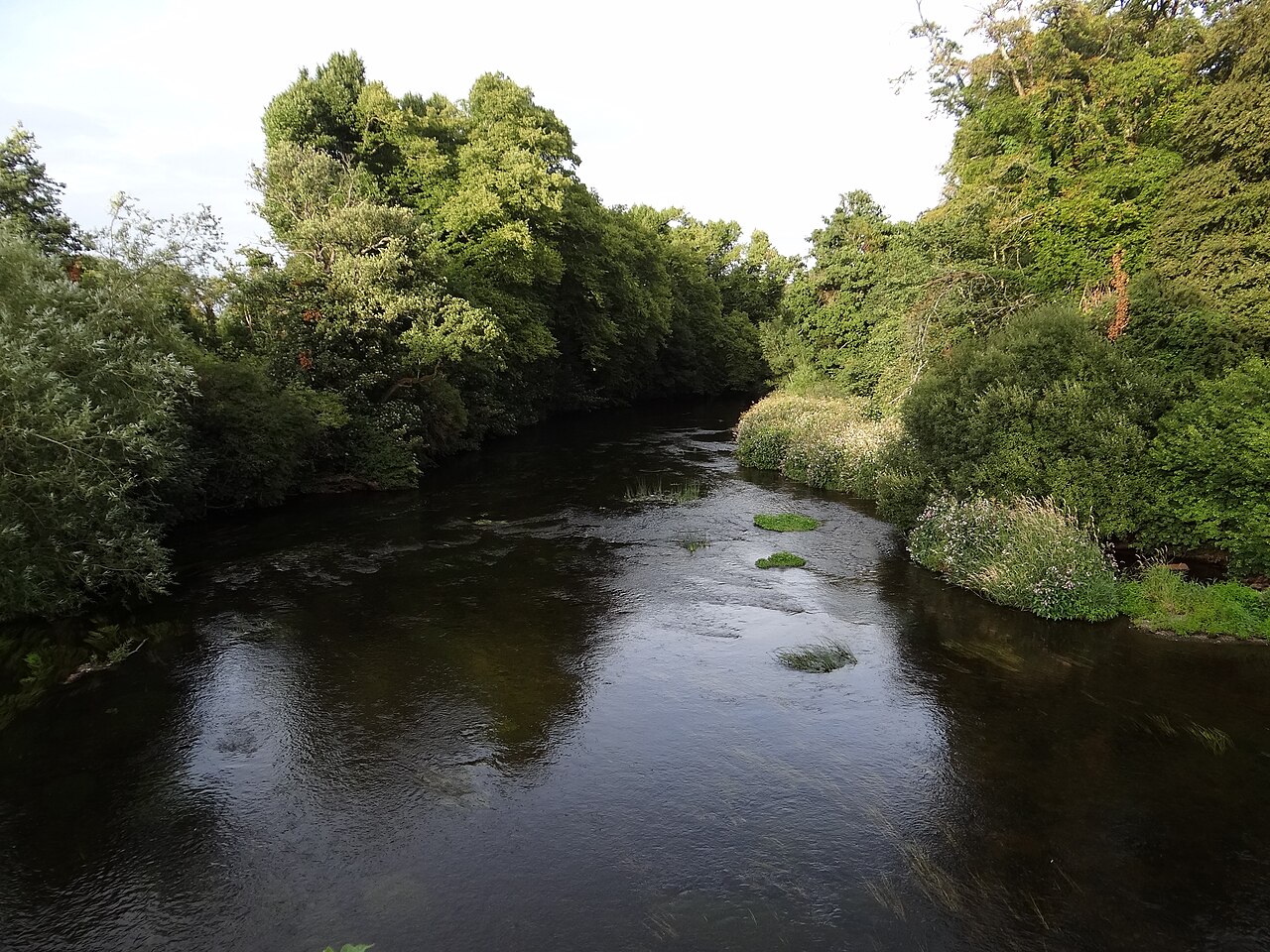
The River Liffey is one of Ireland's most fascinating and diverse trout rivers, flowing for over one hundred and thirty kilometres from its source high in the Wicklow Mountains through the limestone plains of County Kildare and on through Dublin city to the sea. For anglers, it is the remarkable middle section — the Kildare Liffey — that holds the greatest interest: a rich, meandering trout stream that produces wild brown trout of exceptional quality, including fish to specimen weight and beyond.
The Liffey's transformation is extraordinary. It begins as a poor, acidic mountain stream above Sally Gap, tumbling through granite and heather before entering the vast Poulaphouca Reservoir at Blessington. Below the dam, the river enters an entirely different geological world. As it flows across the limestone plains of Kildare through Ballymore Eustace, Kilcullen, Newbridge, Clane, Straffan and Celbridge, it becomes one of the richest trout rivers in the east of Ireland. Dr Michael Kennedy of the Inland Fisheries Trust recorded some of the fastest-growing brown trout in Ireland in the river near Lucan.
The fly hatches on the Kildare Liffey are prolific and varied. Dark olives appear from March, with excellent hatches driving the early season fishing. Sedges — including grey flags — provide outstanding evening sport through summer. The yellow evening dun hatches heavily around Clane, and the blue-winged olive appears from mid-season, though the Liffey's variant has an unusually dark wing requiring specifically dressed imitations. There is some mayfly, though it is patchy rather than a defining feature. May and September are widely regarded as the best fishing months, though good sport can be had throughout the season.
Trout on the Kildare Liffey average around a pound, with fish of two to three pounds caught regularly by skilled anglers. Each season produces trout over the specimen weight of five pounds — remarkable for an eastern river within an hour of Dublin. The trout are wild, free-rising and challenging, demanding good presentation and accurate fly selection. This is not easy fishing, but it is immensely rewarding.
Salmon and sea trout run the lower Liffey from Dublin through Lucan to Leixlip, though this fishery has declined significantly and the river is currently closed for migratory fish upstream of Leixlip Dam. Below the dam, catch-and-release salmon fishing is available through the Dublin and District Salmon and Trout Anglers Association, with free fishing at Memorial Park above Islandbridge. The Strawberry Beds stretch along the lower Lucan road is a well-known salmon beat.
Fishing on the Liffey is controlled by several angling clubs and private owners, with day permits typically costing around ten euros and available from local tackle shops and post offices. The river's proximity to Dublin — the best trout water is barely an hour from the city centre — makes it an invaluable resource for urban anglers seeking high-quality wild trout fishing without a long journey.
Salmon: June, July, August
Sea Trout: July, August
Brown Trout: May, June, September
Difficulty
Intermediate
Access & bases
The Liffey is accessible from the N7 and M7 motorways (Dublin to south-west) and the N4/M4 (Dublin to west). Key fishing stretches with access: Ballymore Eustace (Ballymore Eustace Trout & Salmon Anglers Association), Kilcullen and Newbridge (North Kildare Trout & Salmon Anglers Association — day tickets from local post offices and tackle shops), Clane (Clane Trout & Salmon Anglers Association), Straffan (K Club/private), Celbridge to Leixlip area. Parking at road bridges and designated spots. Access is through landowner goodwill — respect fences, crops and livestock.
Signature features
Dublin's Wild Trout River
The Liffey's Kildare section offers genuine wild brown trout fishing of the highest quality barely an hour from Dublin city centre. For urban anglers, this is an invaluable resource — a river with prolific fly hatches, free-rising trout, and the realistic prospect of a specimen five-pounder in the same county as the capital city.
Exceptional Fly Hatches
The limestone-enriched Kildare Liffey supports an outstanding range of aquatic invertebrates. Dark olives, iron blues, sedges including grey flags, yellow evening duns, blue-winged olives, midges and some mayfly provide a succession of hatches throughout the season. The variety and density of these hatches create superb dry fly and wet fly opportunities from March through September.
Geological Transformation
The Liffey's journey from poor acidic mountain stream to rich limestone trout river is one of the most dramatic transformations in Irish river ecology. The change happens as the river crosses from the granite geology of the Wicklow Mountains to the carboniferous limestone of the Kildare plains below Poulaphouca. This geological shift creates the alkaline, mineral-rich water that supports the prolific insect life and fast-growing trout.
Season by season
March – April
Early season fishing with dark olive hatches driving the first consistent rises of the year. March can be cold and challenging but rewarding for anglers willing to brave the conditions. Wet fly fishing with spider patterns and traditional wets is effective. April brings improving conditions and more consistent hatches. The ESB water releases from Golden Falls affect river levels — observe the timing of releases before planning sessions.
May – June
The prime months on the Kildare Liffey. May offers the best all-round fishing with excellent olive hatches, some mayfly, and the first sedges. Dry fly fishing becomes increasingly productive. June brings outstanding evening sedge hatches and the yellow evening dun appears around Clane. The longest daylight hours allow extended evening sessions. May is considered by many regulars to be the month to fish the Liffey.
July – August
Summer fishing is more challenging with lower water, brighter conditions and wary trout. Early morning and late evening sessions are most productive. Sedge fishing at dusk can be excellent. The blue-winged olive appears, though the Liffey's dark-winged variant requires careful imitation. Terrestrial patterns — hawthorn flies, black gnats — produce fish during warm spells.
September
The final month of the season brings a resurgence in activity. Cooler nights and shortening days stimulate trout feeding. September can rival May for quality of fishing, with strong olive and sedge hatches and trout feeding with the urgency of approaching season's end. Wet fly fishing with traditional patterns comes back into its own.
Best conditions
Based on 0 reports, these conditions consistently produce the best fishing on River Liffey:
💨
Light SW or W wind creating a ripple on the glides
Best wind
☁️
Overcast with mild temperatures for olive hatches. Warm evenings for sedge
Best sky
🌡️
10–16°C
Water temp
⏰
10am–2pm for olive hatches. 7pm–dark for sedge fishing.
Best window
Seasonal fly & tactics guide
Early Season Wet Fly (March – April)
Patterns
Greenwell's SpiderPartridge and OrangePheasant TailKill Devil SpiderDark Olive Nymph
Fish a team of two or three wet flies — north country spiders are particularly effective on the Liffey. Cast upstream and across, allowing the flies to drift and swing through likely lies. A point fly of a Greenwell's Spider with a Partridge and Orange on the dropper is a classic Liffey combination. Cover the riffles, runs and pool heads where trout hold in the faster water. The hatch of dark olives typically starts mid-morning on overcast days.
⚠️Common mistake: Fishing too deep and too slow. Early season Liffey trout often take spiders and wets just below the surface, especially when olives are hatching. A drag-free drift at medium depth is more effective than dredging the bottom.
Peak Dry Fly (May – June)
Patterns
Olive KlinkhammerGrey Flag SedgeBlack GnatSmall Dark OliveYellow Evening Dun
Dry fly fishing comes into its own as hatches intensify. Match the hatch — observe what insects are on the water before selecting a pattern. Present the fly upstream on a fine leader (5X or 6X) with a dead-drift. The Liffey's trout are educated by fishing pressure and will refuse a poorly presented fly. For evening sedge fishing, a bushy sedge pattern skated gently across the surface can draw explosive takes.
⚠️Common mistake: Using too heavy a tippet. Liffey trout in the Kildare section are often fly-shy, particularly on the more popular stretches. Drop to 5X or 6X fluorocarbon for dry fly work, and keep false casting to a minimum — these trout notice.
September fishing combines the best of wet and dry approaches. Fish wet flies through the morning, switching to dry when olives or sedges appear. The blue-winged olive hatch can provide superb dry fly fishing — note that the Liffey variant has an unusually dark wing, so dress your Orange Quill with a very dark blue dun hackle. Trout feed aggressively in September, knowing winter is approaching.
⚠️Common mistake: Ignoring the blue-winged olive. Many anglers fish standard BWO patterns that are too light for the Liffey's dark-winged variant. A darker dressing — almost black-winged — is essential for consistent success during this hatch.
Core technique
Upstream Dry Fly on the Kildare Liffey
1Position yourself downstream of a rising trout, staying low and using bankside vegetation for cover.
2Use a 9ft rod rated 3-4 weight with a long, fine leader tapering to 5X or 6X at the point.
3Select a fly to match the insects you can see on the water — carry a range of olives, sedges and terrestrials.
4Cast upstream and slightly across, landing the fly two to three feet above the trout's position.
5Follow the drift with your rod tip, stripping in slack line to maintain contact without dragging the fly.
6On the take, pause briefly — the trout must turn down with the fly before you lift the rod to set the hook.
7Play the fish on the reel, keeping it away from weed beds and overhanging branches.
💡 The Liffey's glassy flats and clear water make accurate, delicate presentation essential. Practice your casting to achieve a gentle turnover without lining the fish.
What works here
Flies and methods reported most successful by the community.
Where to Fish at River Liffey
Ballymore Eustace
Immediately below Poulaphouca Dam, the Liffey emerges as a young adult river entering the limestone plains. The Ballymore Eustace Trout & Salmon Anglers Association controls this stretch. Excellent early-season wet fly fishing with dark olives, and productive dry fly water through summer. Trout average around a pound with larger fish present.
Kilcullen to Newbridge
The heart of the Kildare Liffey. The North Kildare Trout & Salmon Anglers Association controls extensive water here. Rich, productive trout fishing with excellent fly hatches. Day tickets available for approximately €10 from local outlets. The river alternates between riffles, glides and deeper pools. Good access from road bridges and designated paths. This stretch produces specimen trout each season.
Clane
The Clane Trout & Salmon Anglers Association manages fishing from Millicent Golf Club downstream to below Alexandra Bridge. Notable for heavy hatches of yellow evening duns and excellent sedge fishing. Some of the best evening dry fly fishing on the entire river. The Leinster Aqueduct area provides good access and productive riffles.
Straffan to Celbridge
The river matures and deepens through this stretch. The K Club at Straffan offers premium fishing on private water. Between Celbridge and Straffan, some excellent trout fishing is available through local arrangements. Larger fish are present in the deeper pools. This stretch is closest to Dublin, making it popular for evening sessions.
Lower Liffey (Leixlip to Islandbridge)
The salmon and sea trout water. Fishing below Leixlip Dam is catch-and-release only for migratory species. The Dublin and District Salmon and Trout Anglers Association controls water at Islandbridge and the Strawberry Beds. Free fishing at Memorial Park above Islandbridge. Salmon are taken on spinners, worms and sea trout flies. An urban fishing experience with surprisingly wild moments.
Suggested trip formats
🎣 Spring Morning on the Liffey
A half-day wet fly session on the Kilcullen or Newbridge stretches. Arrive mid-morning for the dark olive hatch, fish through to early afternoon. Bring a team of spider patterns and a few dry olives. A perfect introduction to Liffey trout fishing. Day ticket from the post office in Newbridge.
🎣 Evening Sedge Session
An evening trip targeting the sedge hatch on the Clane or Straffan water. Arrive around 6pm, fish through dusk with bushy sedge and emerger patterns. The last hour of light can produce explosive surface takes. Ideal for anglers commuting from Dublin — the water is barely an hour from the city.
🎣 Full Season Campaign
For Dublin-based anglers, a season ticket with one of the Liffey clubs offers a year of varied fishing. March spiders, May dry olives, June sedges, July terrestrials, September late-season action. Each visit builds knowledge of the river's moods and hatches, and the chance of a specimen trout grows with understanding.
Conservation & stewardship
🌿
The Liffey's brown trout population is entirely wild and self-sustaining. Catch-and-release is strongly encouraged, particularly for larger fish. Barbless hooks are mandatory by law on the Liffey (Bye-law No. 982 of 2020). Handle trout carefully in the water and return them quickly. The ESB water releases from Poulaphouca and Golden Falls affect river levels — rising water can displace insects and fish. The river faces pressures from development, agricultural runoff and urban encroachment, making responsible angling and environmental vigilance essential.
Frequently asked questions
Before You Go — Key Regulations
Jurisdiction
Republic of Ireland (IFI)
Season
March 1 – September 30
Licence required
Yes — State Salmon Rod Licence
Brown trout: March 1 to September 30. Angling Bye-law No.
Main access: Pat Clintons Angling and Shooting Centre at Ballydowd, Lucan stocks Liffey-specific flies and tackle. Tackle shops in Newbridge, Naas and Clane sell permits and supplies, Hotels, B&Bs and guesthouses in Newbridge, Naas, Clane, Celbridge and across County Kildare — all within easy reach of the river, North Kildare Trout & Salmon Anglers Association, Ballymore Eustace T&SA, Clane T&SA, Dublin Trout Anglers Association, Dublin & District Salmon Anglers Association