📍Galway · West📋IFI (Republic of Ireland)Season Open
2Species Present
County
Galway
Region
West
Type
River
Species
Atlantic Salmon, Sea Trout
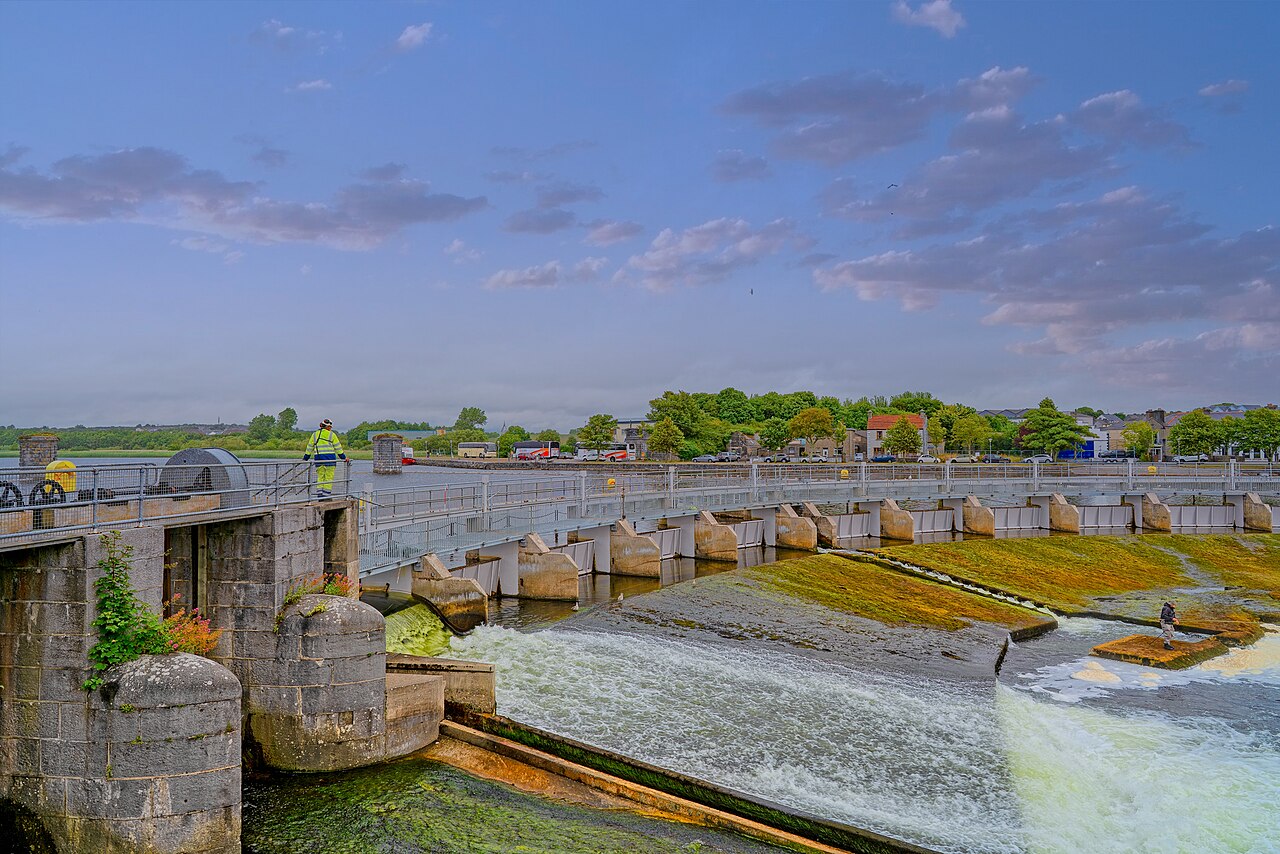
The Galway Salmon Weir is one of the most remarkable urban fisheries in Europe — a short, intense stretch of the River Corrib running through the heart of Galway city, where wild Atlantic salmon stack in exceptionally clear water before pushing through the weir on their journey to Lough Corrib. Few fisheries anywhere place an angler simultaneously in the middle of a city and a serious wild salmon run.
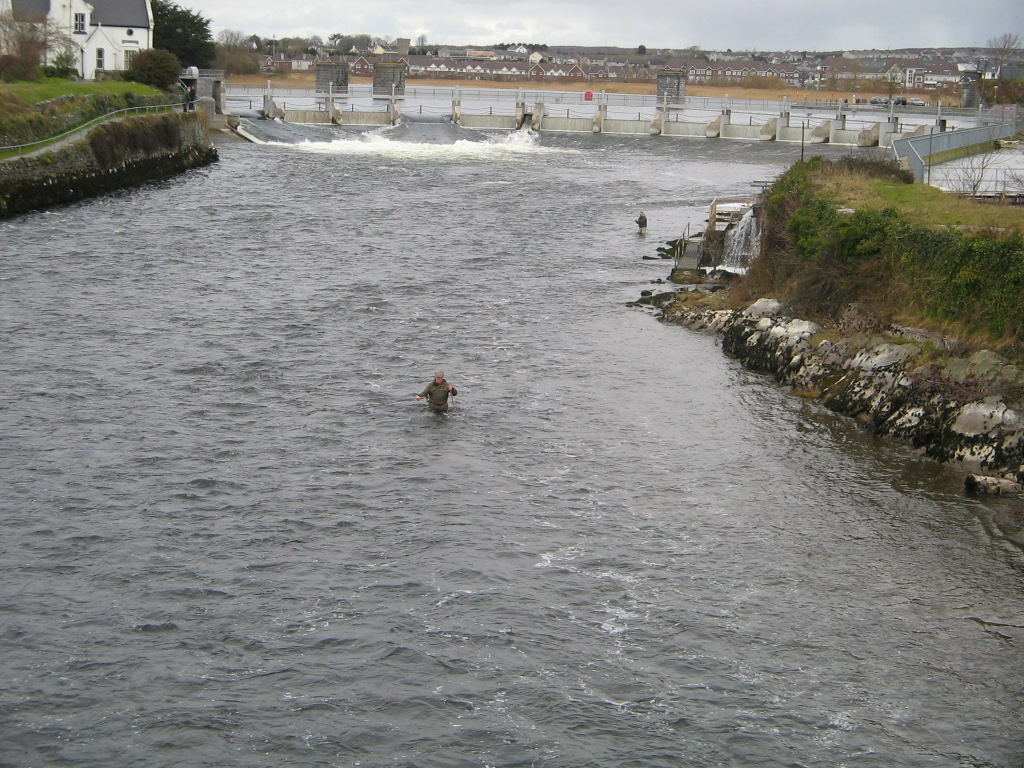
The main angling beat — the Weir Beat — runs for approximately 200 metres between the weir itself and Salmon Weir Bridge, directly alongside Galway Cathedral. The River Corrib, formally known as the Galway Fishery, begins at Nimmo's Pier near the Claddagh in Galway Bay and extends through the city canals and two outlet rivers to a portion of Lough Corrib. The Weir Beat is the most productive section of the fishery, where the gradient and current combine to hold fish and create excellent fly water when one or two of the OPW sluice gates are open. In summer, shoals of salmon are often visible swaying in the current from the bridge above — a spectacle that has drawn visitors to Galway for generations.
Spring salmon can be taken from the opening of the season on February 1st. The main grilse run arrives from late May and continues well into July, the most sought-after period on the fishery. Fishing continues through August and September as the season draws to a close, with salmon present throughout. The Corrib consistently ranks among the top five salmon-producing rivers in Ireland.
Sea trout are also present in the fishery but are fully protected in the Galway Fisheries District. Killing a sea trout here is an offence under IFI regulations, regardless of size. All sea trout must be returned immediately and unharmed.
The fishery is managed by IFI and operates a strict rod limit and rotation system. Only six rods are permitted per session on the Weir Beat, and anglers must alternate in the weir pool after one hour. Fly anglers wading from the east bank hold right of way. The fishery runs full-day and half-day sessions; between June 1st and July 14th the day divides into two sessions, with evening sessions often bookable on the day. The most popular June and July dates are typically allocated from early February, and applications well in advance of the season are strongly advised.
The fishery sits in Galway city centre, within walking distance of the Spanish Arch and a full range of accommodation and restaurants. The wading is technically demanding — the riverbed is uneven with holes and large submerged rocks — and a wading staff is strongly recommended. All bookings are made directly through the Galway Fishery office at Nun's Island.
Spring Salmon · Grilse Run · Urban Fishery · Permit Required · Fly Only
Difficulty
Advanced / Experienced
Access & bases
The Galway Salmon Weir is situated in Galway city centre, adjacent to Galway Cathedral and Salmon Weir Bridge. All bookings must be made in advance through the Galway Fishery office at Nun's Island, Galway (galwayfishery@fisheriesireland.ie / +353 91 563118). Applications for the main season should be submitted before February 1st. The standard fishing day runs from 9am to 7pm, with half-day options from 9am–2pm or 2pm–7pm. Between June 1st and July 14th the day divides into two sessions: 6am–1pm and 1:30pm–8:30pm. Evening sessions after the main sessions are generally bookable on the day. Waders and a wading staff are recommended due to the uneven riverbed.
Signature features
Urban Wild Salmon Fishing
The Galway Salmon Weir is one of very few places in the world where an angler can stand knee-deep in a wild Atlantic salmon river in the centre of a busy city. The fishery sits in the shadow of Galway Cathedral, with Salmon Weir Bridge overhead and the sounds of the city all around.
Visible Salmon
In summer, shoals of salmon can often be seen holding in the clear water from Salmon Weir Bridge above the fishery. This sight has drawn visitors to Galway for generations and gives anglers a rare opportunity to observe the fish they are targeting before stepping into the water.
Fast, Technical Water
The gradient and current of the Weir Beat create fast, demanding fly water. The OPW sluice gates control flow, and the best fly conditions occur when one or two gates are open. The riverbed is uneven with holes and submerged rocks, making careful wading essential.
Season by season
February – May
Spring salmon fishing from the season opening on February 1st. Spring fish tend to be larger than the summer grilse. Full-day sessions are available from opening day, and the fishery is less pressured during this period. Water levels and gate openings influence conditions significantly in early season.
Late May – July
The peak grilse run and the most sought-after period on the fishery. Demand for rods is at its highest, particularly for June and July dates. From June 1st to July 14th the fishing day divides into two sessions to maximise angling opportunity. Evening sessions after the main sessions are often available on the day and can be highly productive.
August – September
Late season fishing with the session structure returning to a full day. Salmon remain present through to the close of season on September 30th, though numbers are typically lower than the peak summer months. A quieter, less pressured time to fish the weir.
Best conditions
Based on 0 reports, these conditions consistently produce the best fishing on Galway Salmon Weir:
💨
Sheltered — city location provides natural wind protection
Best wind
☁️
Any conditions
Best sky
🌡️
Season-dependent
Water temp
⏰
One or two OPW sluice gates open creates ideal fly conditions. High flood colours the water and makes fishing very difficult.
Best window
Seasonal fly & tactics guide
Spring (February – May)
Patterns
Hairwing salmon fliesShrimp patterns
Spring fishing on the Weir Beat typically involves a floating or intermediate line with a longer leader to work the fly at the right depth in the faster water. Fish tend to hold in the steadier lies when one gate is open. Take time to read the water before committing to a position and fish the beat down methodically step by step from the top.
⚠️Common mistake: Rushing through the beat. The rotation system requires discipline — fish the water down carefully before moving on, and respect the one-hour rotation rule at the weir pool.
Grilse Run (June – July)
Patterns
Smaller hairwing fliesTube flies
Peak season with the largest numbers of fish present. The split session structure from June 1st means an early start. Water speed increases with more gates open during summer spates, and a sink tip or polyleader can help get the fly down quickly in the fast current. Evening sessions after the main sessions are often overlooked and can be very productive.
⚠️Common mistake: Only targeting the obvious holding lies. Fish can be taken throughout the beat, including in water that looks too fast, when conditions are right.
Late Season (August – September)
Patterns
Hairwing patternsShrimp flies
Full-day sessions resume after mid-July. Fewer anglers and less pressure than peak season. Fish continue entering the system through August and into September. Water temperatures and levels vary and adapting to conditions on the day is key.
⚠️Common mistake: Underestimating late season. September in particular can produce good fishing as fresh fish continue to move through.
Core technique
Downstream Wet Fly
1Enter the water at the top of the beat and fish down step by step, covering each lie methodically before moving downstream.
2Cast across and slightly downstream, allowing the fly to swing through the current on a tight line.
3Adjust line density and leader length to match the speed and depth of the water — one or two open sluice gates creates the best fly conditions.
4At the bridge, cease fishing, return to the top of the beat, and recommence. Alternate in the weir pool after one hour as required by the fishery rules.
5Use a wading staff at all times — the riverbed is uneven with holes and large submerged rocks, particularly in the upper and middle sections of the beat.
💡 Fly anglers wading from the east bank hold right of way under the fishery rules. Always fish with barbless or debarbed hooks to comply with conservation regulations and to make releasing fish quicker and less stressful.
What works here
Flies and methods reported most successful by the community.
Where to Fish at Galway Salmon Weir
Weir Beat
The main angling beat, running approximately 200 metres from the weir downstream to Salmon Weir Bridge alongside Galway Cathedral. The most productive and most in-demand section of the fishery. Six rods per session; rod rotation required after one hour in the weir pool.
New Beat
From Salmon Weir Bridge downstream to the old salmon traps. Fish tend to move through this beat more quickly, and the faster water makes fishing more demanding. Salmon can be taken on the fly, particularly in the lowest pool. Takes four rods.
City Canals
At various points through Galway city, old canals running off the River Corrib hold good numbers of brown trout over limestone bottoms. Fishing is free of charge and offers a more relaxed option alongside the main permit fishery.
Suggested trip formats
🎣 Spring Day Session
A full-day permit on the Weir Beat during February, March, or April. Less pressure than summer, larger spring fish available, and the full day to fish. Ideal for experienced salmon fly fishers who want a quieter version of the Galway experience.
🎣 Peak Grilse Session
A half-day or full-day session during June or July at the height of the grilse run. Book as early as possible — applications open in February and peak dates fill quickly. Evening sessions offer a useful alternative when main session slots are unavailable.
🎣 Evening Session
After-hours evening sessions on the Weir Beat are generally bookable on the day and are often overlooked by visiting anglers. They can be very productive and offer a quieter, different atmosphere on the fishery.
Conservation & stewardship
🌿
Sea trout are fully protected in the Galway Fisheries District and must be returned immediately — killing a sea trout is an offence under IFI regulations. Salmon bag limits apply throughout the season and all retained fish must be tagged with an IFI gill tag immediately on landing. Anglers are encouraged to practise catch and release wherever possible. The wild Atlantic salmon resource is under pressure nationally and responsible angling on iconic fisheries like the Galway Weir matters for the long-term health of the stock.
Owen Trill is a professional fly dresser originally from the Claddagh in Galway, now based in Claremorris, Co. Mayo. He ...
Before You Go — Key Regulations
Jurisdiction
Republic of Ireland (IFI)
Season
February 1 – September 30
Licence required
Yes — State Salmon Rod Licence
Season: February 1 to September 30. A current State Salmon Angling Licence is required — available from IFI at store.fishinginireland.info or from licence distributors.
Main access: Local guides operate on the Galway Salmon Weir and wider Corrib system — see provider listings on fishing.ie, Galway Fishery Office, Nun's Island, Galway — galwayfishery@fisheriesireland.ie / +353 91 563118, Galway Salmon Anglers Association